
Ocean Rainforest Receives First Permit for NOAA Aquaculture Opportunity Area
On October 1, 2026, Ocean Rainforest received its full permit from the U.S. Army Corps of Engineers (USACE) for its commercial-scale offshore kelp cultivation project in federal waters off Ventura, California. The permit follows the California Coastal Commission’s unanimous approval of the project in September 2026.
It is the first aquaculture project to receive a permit within a NOAA-designated Aquaculture Opportunity Area (AOA) and represents a major step toward establishing commercial-scale offshore seaweed cultivation in California.
Permitted Within a NOAA Aquaculture Opportunity Area
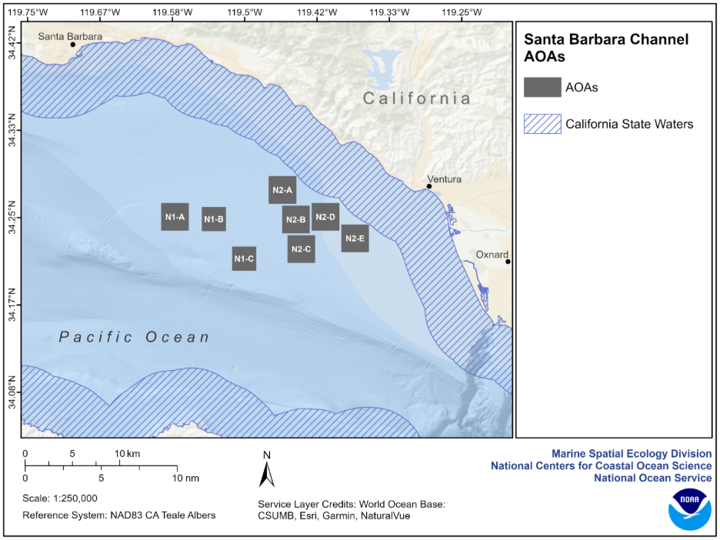
Figure 1: Map of the eight AOAs identified by NOAA in the Santa Barbara Channel.
The project is sited with NOAA Aquaculture Opportunity Area N2-D, which lies in federal waters approximately six miles offshore from Ventura Harbor. Site N2-D spans 2,000 acres of predominately flat, soft-bottom seafloor with water depth averaging at about 100 feet.
NOAA published the Aquaculture Atlas for the Southern California Bight in 2021, identifying 10 potential Aquaculture Opportunity Areas; two in Santa Monica Bay and eight in the Santa Barbara Channel. In 2025, NOAA released a final programmatic environmental review of all 10 areas, officially designating them as AOAs. These areas were identified due to their low overlap with existing ocean uses, proximity to port infrastructure, and oceanic qualities conducive to aquaculture.
AOA designation does not pre-permit aquaculture projects. Instead, it provides critical data and marine spatial planning that can help inform site selection and project-specific environmental review.
Ocean Rainforest underwent an independent marine spatial planning exercise with NOAA’s National Centers for Coastal Ocean Science, which identified an area that almost entirely overlapped with Aquaculture Opportunity Area N2-D. This validated Ocean Rainforest’s site identification and bolstered the project with the over 200 data layers incorporated into the AOA study.
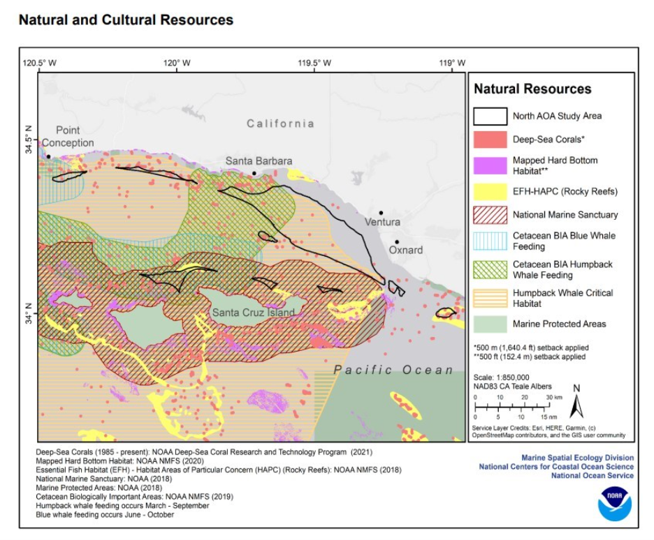
Figure 2: Natural Resource data layers that were considered in the AOA marine spatial planning, which were part of the over 200 data layers considered in the study.
Extensive marine spatial planning was essential to Ocean Rainforest receiving a final permit from the US Army Corps of Engineers, as effects to other ocean users and natural resources could be greatly minimized. NOAA’s designation of AOAs provides prospective aquaculture projects with essential information on site selection and can lower the barrier to entry into the industry.
Helping to shape the future of the industry
With this permitted project, Ocean Rainforest intends to build upon previous experience with commercial scale seaweed cultivation in exposed offshore conditions. Having completed a 2-year demonstration project in federal waters approximately 4 miles offshore of Santa Barbara, along with over a decade of seaweed cultivation expertise in the Faroe Islands, Ocean Rainforest is ready to take the next step in scaling the industry in California. Operating offshore aquaculture at this scale in the US is unprecedented, and it is an opportunity to demonstrate how responsibly managed projects can be developed alongside environmental stewardship and coexistence with other ocean uses.
Looking Ahead
Ocean Rainforest will undergo additional planning, fundraising, and coordination with agencies and stakeholders prior to installation of the first phase of the project. Construction will likely begin in 2027 or later. The company will remain transparent about timelines and plans, and welcomes collaboration with research institutions, industry, and regulators.
Ocean Rainforest extends its sincerest thanks to NOAA’s National Centers for Coastal Ocean Science for its work on the Aquaculture Opportunity Area studies and its contribution to the scientific foundation supporting US offshore aquaculture.